Insufficient, Indispensable, or Invisible?
Finding another way through Heidegger’s moods and the messy reality of parenting.

Hello! How are you doing today?
Email - and equilibrium - restored for me, I read an email newsletter by the brilliant Laura Hartley of Scintilla. She’s a writer, activist, and leadership coach and I really like her approach and writing because it gives you the comfort that someone is thinking about the important stuff, alongside the connection of her individual take on the world.
In her latest email, she referenced Mark Carney’s address where he says that we are in the midst of a rupture; that the old world order isn’t coming back; and that nostalgia isn’t a strategy. (It’s worked for 54 years for me, Mark, but what do I know?!)
If that is the case, why as humans are we so intent on replaying our patterns? And when I say humans, I mean me!
I found myself falling, nay hurtling, towards a very comfortable place in an exchange with someone yesterday. They didn’t know it, but I did. The act of seeing it was a win - not because it didn’t happen, but because I noticed it. And it got me thinking, along with Heidegger.
Martin Heidegger was a German philosopher who saw moods as something beyond psychological or cognitive choice - not something we decide - but as things that assail us in our exchange with the world around us. Moods, Heidegger said, are the way we become attuned to the different contexts and environments we find ourselves in, and therefore a mood comes neither from within or without, but because we exist and are experiencing the world now.
This means that mood is not an emotion we hold, but the way we are already oriented toward the world before we think anything at all. Before we tell ourselves a story, judge or analyse, we’re always already finding ourselves somewhere. He called it Befindigkeit which roughly translates as ‘the state in which one may be found.’ And that state shapes what we notice, what feels possible, what we engage with - and how.
Before you think ‘I feel anxious’ you are already in a world that feels threatening. Before you think ‘I’m not enough’ you’re already in a world that feels too much. Mood, in this sense, isn’t our internal weather, it’s the atmosphere we find ourselves in.
And this means when we say ‘I’m different with different people’ we’re not talking about masking or fakery, we’re talking about different worlds coming into being and different versions of ourselves emerging within them.
With one person, I can find myself competent, articulate, and grounded.
With another, suddenly I’m the one who can’t quite get it right.
With my children, especially in crisis, I can feel myself becoming the one who must hold everything together and, over time, paradoxically, becoming softer because of their strength.
These aren’t roles I’m consciously choosing. They’re ways of being-in-the-world that get activated relationally. Each comes with its own version of reality, and they’re not always pleasant, but they are always enlightening.
I’ve been thinking about this as a kind of underlying triangle - not Karpman’s Drama Triangle of behaviour, but something beneath it that might offer a different entrance into Heidegger’s work.
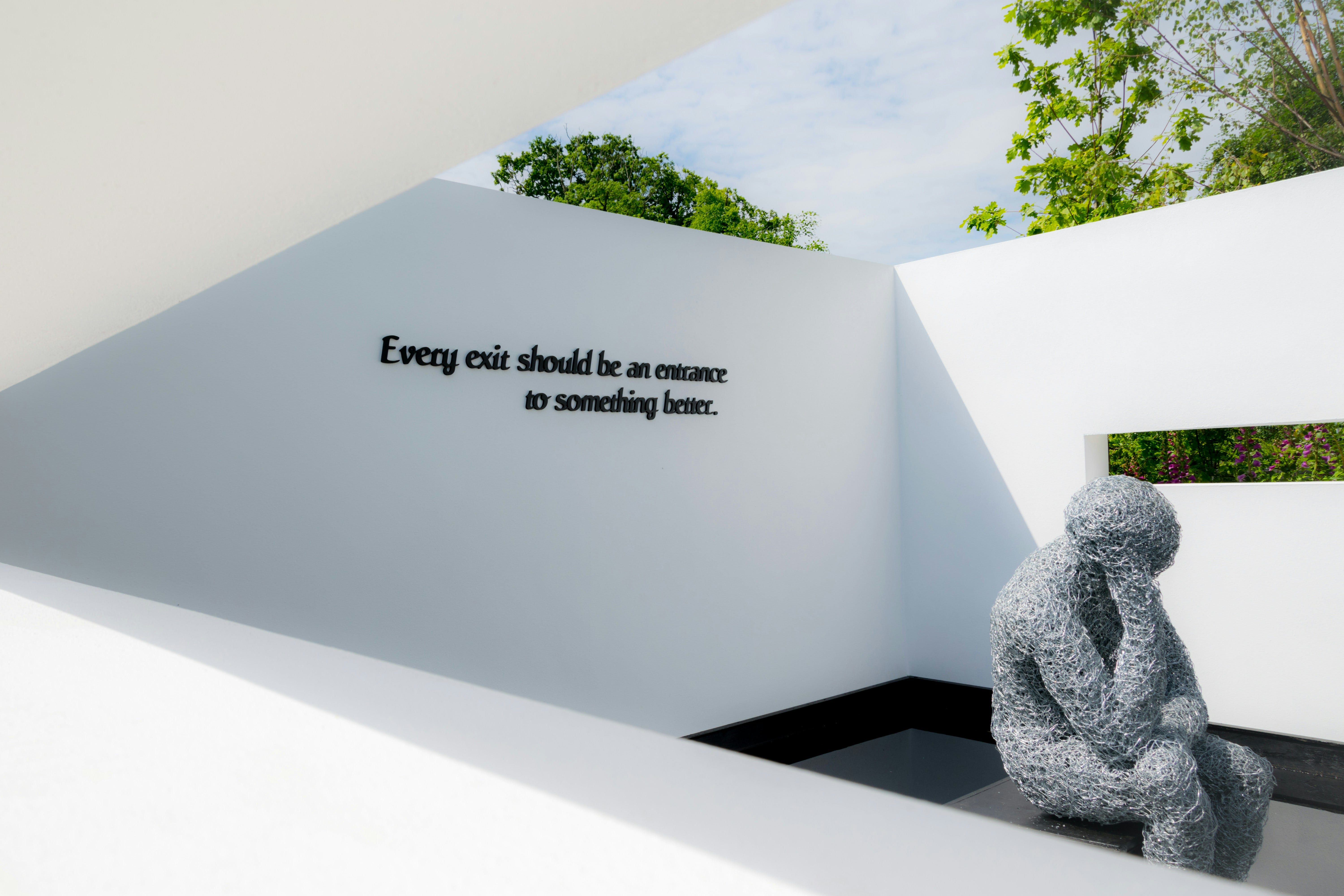
There’s Insufficient, where the world shows up as too complex, too demanding, and beyond our capacity. Other people seem more capable, we defer. We apologise pre-emptively, we stay small. And don’t get me started on the exhaustion that comes from the constant vigilance of not being found out.
There’s Indispensable, where the world meets us as fragile. Everything feels like it might fall apart if we stop paying attention, so we organise, anticipate, and carry. Rest feels irresponsible, letting go feels dangerous, and we feel like we’re the only one taking this seriously! And the exhaustion here comes from never being off-duty.
And there’s Invisible, where the world seems complete without you and there is no place for what you bring, or may bring. Your presence doesn’t quite register, sometimes not in the way you hope, so you fade into the background, observe rather than participate, and accommodate rather than impose. This exhaustion is the slow erosion of self.
Like the Drama Triangle, these positions don’t exist in isolation - they form a system. When one person becomes Indispensable, others often slide into Insufficient or Invisible. When we find ourselves Insufficient, others can become Indispensable - and suddenly we’re no longer relationally connected. We’re each meeting the world alone.
And this is doubly, triply, infinitesimally hard in parenting. How do we recognise our own Befindlichkeit when we’re so intent on our child’s?
Which brings me back, again, to Partnering, the relational approach I’ve lived and taught over the last 7 years, that supported my daughter and I into alignment, towards stabilisation, and into a new version of agreed connection.
‘Step Down, Stand Beside, Travel Together’ from the Partnering approach isn’t just a behavioural shift, or a quick reminder in the heat of a WTF moment. It’s ontological. It’s not moving from ‘I rescue’ to ‘I don’t rescue.’ It’s moving from finding-yourself-as-Indispensable, where the world shows itself as fragile and requiring constant management, to finding-yourself-as-companion - even if your Befindlichkeit feels different.
That’s a completely different attunement, a different mood, and a different way the world shows up when the world that shows up is not what you want. At all.
And it explains why the shift is so hard. Because you’re not just changing what you do, you’re challenging the entire way reality has been presenting itself to you. When you’ve spent years finding yourself as Indispensable, the world genuinely looks like it needs you to hold it together. To Step Down from your emotions, your experience, your judgement and particularly your authority doesn’t feel wise. It feels like utter emotional free-fall. (I mean, who is this lunatic person writing this?!)
What sits on the other side of this for us as parents might sound like something technical - interoperability. I don’t really like it, it doesn’t feel at all warm, but I don’t quite have a better word, especially not one that begins with the letter I (anyone else an avid admirer of alliteration?) What I really mean is inter-attunement - staying present with yourself while responding, moment by moment, to what’s actually happening between you and the person in front of you. Not collapsing into them, or overriding them, or disappearing from the exchange altogether.
Inter-attunement isn’t a new position to occupy, it’s a mood to meet and adapt to, like a new capacity for us to define. We notice when we’re being pulled into being the Indispensable One, or the Insufficient One, or the Invisible One, and we don’t judge ourselves. By doing that, we loosen our hold just enough to respond rather than react.
Parental attunement is about being capable without becoming indispensable, acknowledging limits without shrinking, stepping back without vanishing, and crucially, tolerating the whiplash of not having a fixed way of being at all.
The hardest part of parenting through adversity isn’t our child’s behaviour, or the counterintuitive strategies, or even the hyper-fear and deep grief we carry. It’s finding the resolve and the energy to stay present while the world refuses to disclose itself in a predictable way.
Inter-attunement has its own feel to it, like an almost oxymoronic groundedness in flux. It’s the sense that I’m here, in this, with you - and I am - and I don’t need to know exactly how this goes - which might be what we need most in times of rupture.
Mark Carney may be right about nostalgia after all. Maybe the person we were isn’t the person who can release the Invisible, Indispensable, and Insufficient selves and become Interoperable. Maybe that’s the work of the moment and the uncertain future.
I’ll leave you to ponder…
I’ll be back again tomorrow with another Daily Ramble. Thanks for being here.
Whoa! Deep stuff 😜. I can attest that partnering is a becoming not a simple doing. It's hard to measure or see the change but it's definitely a shift in befindlichkeit that I'm grateful for.